
Delivery
Dedicated development team cost in 2026
A dedicated team is a monthly bill, not a project quote. Here is what the common squad shapes cost, what the rate actually covers, and the clauses that change the number more than the rate does.
By Umar HayatChief Technology Officer, Algo Vortex
Key takeaways
Think monthly, not total
A dedicated team is a recurring cost for a roster. If you are thinking in project totals, you probably want a scoped build instead.
Squad shape drives the number
Three engineers with a shared lead and part-time QA is a different bill from five engineers with dedicated design and QA.
Blended rate hides useful detail
Ask for the per-role rate. A blended number can hide a squad that is mostly junior with one senior name on the proposal.
Notice period matters more than rate
A ten percent better rate on a ninety-day notice is worse than a slightly higher rate you can exit in thirty.
What does a dedicated team cost per month in 2026?
Dedicated teams are priced per person per month, so the total follows the roster. These are typical monthly figures for a South Asian delivery centre including Pakistan, covering fully employed engineers with equipment, office, management overhead, and partner margin included.
A starter squad of two engineers with a part-time lead and part-time QA commonly runs $12,000 to $20,000 a month. A standard product squad, meaning a lead, three engineers, and a QA engineer, typically lands $25,000 to $40,000. A full product team with dedicated design and a delivery lead on top usually sits $40,000 to $65,000.
The spread inside each band comes almost entirely from seniority mix and specialisation. A squad built around senior engineers with AI or infrastructure depth sits at the top. A squad of capable mid-level generalists sits at the bottom, and for a lot of well-understood work that is the correct choice rather than a compromise.
Compare against the alternative honestly. A standard product squad in a US metro, fully loaded with benefits, recruiting, and payroll tax, is commonly three to four times these figures. Offshore vs in-house development runs that comparison properly, including the costs that never make it onto the spreadsheet.
Typical monthly dedicated team cost, 2026, USD, South Asia delivery
Squad shape
Starter squad
Roster
2 engineers, part-time lead, part-time QA
Typical monthly
$12,000 to $20,000
Squad shape
Standard product squad
Roster
1 lead, 3 engineers, 1 QA
Typical monthly
$25,000 to $40,000
Squad shape
Full product team
Roster
1 lead, 4 engineers, 1 QA, 1 designer, delivery lead
Typical monthly
$40,000 to $65,000
Squad shape
Platform or AI squad
Roster
Senior-weighted, 4 to 5 people
Typical monthly
$45,000 to $80,000
| Squad shape | Roster | Typical monthly |
|---|---|---|
| Starter squad | 2 engineers, part-time lead, part-time QA | $12,000 to $20,000 |
| Standard product squad | 1 lead, 3 engineers, 1 QA | $25,000 to $40,000 |
| Full product team | 1 lead, 4 engineers, 1 QA, 1 designer, delivery lead | $40,000 to $65,000 |
| Platform or AI squad | Senior-weighted, 4 to 5 people | $45,000 to $80,000 |
What does each role cost individually?
Ask for the per-role rate rather than a blended figure. A blended rate is easy to present and it hides the thing you most need to know, which is the seniority mix. Two proposals with the same blended number can describe very different teams.
As monthly ranges for a Pakistan delivery centre in 2026: a mid-level engineer commonly runs $3,500 to $5,500, a senior engineer $5,500 to $8,000, a tech lead $7,000 to $10,000, a QA engineer $2,500 to $4,500, a product designer $3,500 to $6,000, and a DevOps or platform engineer $5,000 to $8,500. Specialised AI or machine learning engineers sit above the senior band, commonly $7,000 to $11,000.
These are all-in monthly costs to you, not the engineer's salary. The gap between the two covers employment cost, equipment, office, recruiting, bench risk, and margin. A partner quoting close to local salary is either running an unsustainable margin or is not actually employing the people.
For hourly equivalents and the rate discussion specifically, offshore development rates in Pakistan goes into more detail.
Per-role monthly cost, 2026, USD, Pakistan delivery centre
Role
Mid-level engineer
Typical monthly
$3,500 to $5,500
Notes
The bulk of most squads
Role
Senior engineer
Typical monthly
$5,500 to $8,000
Notes
Owns a domain, reviews others
Role
Tech lead
Typical monthly
$7,000 to $10,000
Notes
Architecture and technical direction
Role
QA engineer
Typical monthly
$2,500 to $4,500
Notes
Often part-time on small squads
Role
Product designer
Typical monthly
$3,500 to $6,000
Notes
Front-loaded on new products
Role
DevOps or platform
Typical monthly
$5,000 to $8,500
Notes
Frequently shared across squads
Role
AI or ML engineer
Typical monthly
$7,000 to $11,000
Notes
Above the senior band
| Role | Typical monthly | Notes |
|---|---|---|
| Mid-level engineer | $3,500 to $5,500 | The bulk of most squads |
| Senior engineer | $5,500 to $8,000 | Owns a domain, reviews others |
| Tech lead | $7,000 to $10,000 | Architecture and technical direction |
| QA engineer | $2,500 to $4,500 | Often part-time on small squads |
| Product designer | $3,500 to $6,000 | Front-loaded on new products |
| DevOps or platform | $5,000 to $8,500 | Frequently shared across squads |
| AI or ML engineer | $7,000 to $11,000 | Above the senior band |
What should the rate include?
Get this itemised before you compare two quotes, because the differences here are larger than the differences in rate. The rate should include the engineer's full employment cost, equipment, office and connectivity, standard software licences, the partner's internal management and HR, replacement cover if someone leaves, and paid leave coverage.
That last one is worth asking about directly. Whether a rate is quoted against a full month regardless of leave, or pro-rated, changes the effective cost by several percent. Neither approach is wrong, but comparing one against the other without noticing is how a quote wins on paper and loses in practice.
Things that are usually not included: your own cloud and third-party costs, specialised tooling licences for your stack, travel if you want anyone on site, and any equipment beyond a standard developer laptop. None of these should be a surprise if you ask.
Also ask what happens during a ramp. Some partners bill full rate from day one, others discount the first few weeks while the engineer learns your system. Both are defensible and it is worth a percent or two of the annual number.
Which contract terms move the cost most?
The notice period, by a wide margin. Thirty days means you can correct a mistake in a month. Ninety days means a wrong roster decision costs you a quarter of that squad's cost with nothing to show for it. Weigh a better rate against a longer lock carefully, because the longer notice is usually the more expensive option in practice.
Replacement terms next. If an engineer leaves or is not working out, how fast is a replacement in place, and who pays for the ramp on the new person. A partner who absorbs replacement ramp is quietly offering a real discount. A partner who bills it is passing you the cost of their own attrition.
Then the ability to change the roster. Can you add a person mid-quarter, and how quickly. Can you drop one, and with what notice. A dedicated team that cannot flex is a fixed cost pretending to be a variable one.
Finally, the standard terms that are not about money but decide whether the arrangement is safe: IP assignment on payment, your repositories and cloud accounts from day one, named people in the statement of work, and a handover deliverable on exit. How to choose a software development company covers the wider diligence.
When is a dedicated team the wrong buy?
When the roadmap will not keep the squad busy. This is the most common way the model wastes money. You are paying for a roster whether there is work or not, and a team with a thin backlog does not idle quietly, it invents work. If you have three months of clear work and then a question mark, buy a scoped project instead.
When the engagement is short. Under about six months the ramp cost dominates and you never reach the point where continuity pays for itself. Augmentation or a fixed-scope build fits better. Staff augmentation vs outsourcing covers the distinction.
When nobody on your side will own it. A dedicated team needs a product owner who sets priorities and a technical counterpart who answers questions. Without those you are paying five people to guess, which is the most expensive form of engineering there is.
When what you actually need is one specialist. Buying a squad to get access to one skill is an expensive way to hire one person.
Next step
Want a roster and a monthly number?
Tell us the roadmap for the next two quarters and what skills it needs. We will propose a squad shape, a per-role breakdown, and say plainly if a scoped project fits better.
Talk to Algo VortexRelated in this cluster
- Offshore development rates in PakistanHourly rates from Pakistan sit well below Western markets and slightly below India. Here are the 2026 ranges by role and seniority, why the spread is so wide, and what a rate at the very bottom usually means.
- Offshore vs in-house developmentThe comparison boards usually run is a salary against an hourly rate, and it is the wrong comparison. Run the fully loaded number on both sides and the answer often flips.
- Staff augmentation vs outsourcingThese two get used as synonyms and they are not. One adds people to a team you run. The other hands a whole outcome to somebody else. Picking the wrong one is where most vendor relationships go wrong.
- Custom software development costCustom software in 2026 lands in bands, not a single quote. The build, hosting, and the people who keep it all show up. Here is how those numbers typically break for a first production version.
Related capabilities
Related case studies
Live products where this kind of work showed up in the build.
Twilio + OpenAI inbox automation
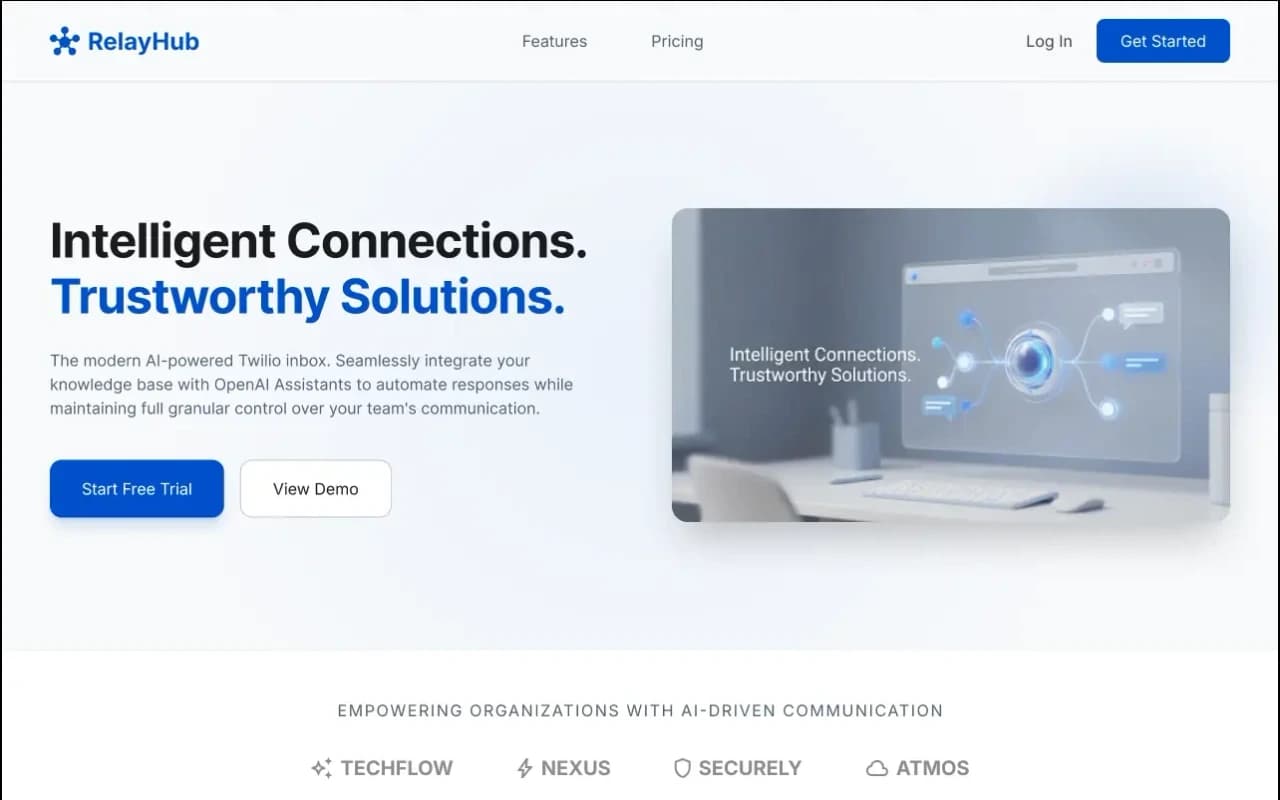
RelayHub started from a blunt observation: phone and chat should not live in separate tools. Sales and support kept losing the thread when a caller switched to SMS or a chat widget. The brief was one shared inbox. Twilio traffic and digital messages land together. AI clears the routine work so people only jump in when judgment matters. Teams also needed to steer the assistant without shipping a new build every time the script changed. Admin-controlled prompts per contact group were in the brief from day one. File digests mattered too. Long PDFs and call notes piled up unread. The product needed a path from upload to a short summary the whole group could scan before the next shift. Nobody on the project believed every reply should be fully automated. Refund fights, tone-sensitive replies, and messy exceptions still need a human. RelayHub uses OpenAI to draft, summarize, and clear the easy queue so senior staff spend time on work that actually needs them.

RouteMind: fleet dispatch that cuts empty miles
AI fleet advisor + live load board
RouteMind exists so shippers and carriers can see loads, capacity, and routes in one place. Dispatch should cost less time and fewer wasted miles. The product pairs a live load board with an AI Fleet Advisor. Planners match freight to available trucks and compare paths with real map data instead of gut feel. Empty miles and stale boards were the business pain. When capacity is a guess, trucks deadhead and fuel burns for no revenue. Status, distance, and advisor guidance had to show up in the tools dispatchers already live in. Another spreadsheet export at the end of the shift was not going to cut it. Dispatchers needed advice that respected current capacity, not a generic logistics chatbot. The Fleet Advisor had to read live loads and vehicle state, then suggest moves a planner could accept or reject in the same UI. RouteMind was never meant to replace judgment. It was meant to cut the time spent assembling the picture before judgment starts.
Questions
More on all insights, AI development, or contact Algo Vortex.