20+ companies · 10+ countries · built from Lahore
Custom software development company for web, mobile & AI
Algo Vortex is a Pakistan-based custom software development company. We build web, mobile, SaaS, cloud, and AI products for startups and enterprises.
40+
Projects delivered
20+
Clients served
10+
Countries supported
9+
Years of experience
Services
What we actually do week to week
Discovery, design, build, and keep-it-running support. Same team owns the work from the first ticket through production.
AI & Data Innovation
Generative AI, ML, and data pipelines that land in products people use, not pilots that die on a slide deck.
Custom Software Development
From discovery through production releases, we build the systems your business actually runs on.
Web & Mobile Development
React, Next.js, Flutter, or React Native apps fast enough for daily use and solid enough to grow.
Cloud & DevOps
AWS, Azure, or GCP with CI/CD and automation so releases stay boring in the good way.
UI/UX Design
Interfaces and design systems shaped by research: clearer flows, fewer tickets, better adoption.
Staff Augmentation
Senior engineers and QA who join your tools and rituals in days, not after a months-long hire.
QA & Security
Automated tests, performance checks, and security-minded QA so fewer surprises show up late.
Digital Strategy & Consulting
Workshops and roadmaps when you need a clear engineering plan before you grow the team.
Industries
We have shipped in these rooms before
Fintech, healthcare, commerce, and SaaS. Less time teaching context. More time deciding what ships next.
Engagement
Pick the shape that fits this quarter
Dedicated squad, offshore development center, a few senior embeds, or a fixed-scope build. We fit how you already run.
Dedicated Team
A cross-functional squad that works only on your product. Fits when the roadmap keeps moving and you need the same people week after week.
Offshore Development Center
A stable offshore software unit in Lahore that follows your process. Built for scale, not a one-off vendor sprint.
Fixed Price Projects
Agreed scope, timeline, and milestones with check-ins. Works when the brief is already clear.
Staff Augmentation
Senior engineers, designers, or QA who join your standups. Most ramp in one to two weeks.
Case studies
Proof from live systems
RelayHub, RouteMind, Loom & Luxe, QuizQuest, and Gusto. Live screens, why each product exists, and the stacks under them.
Twilio + OpenAI inbox automation
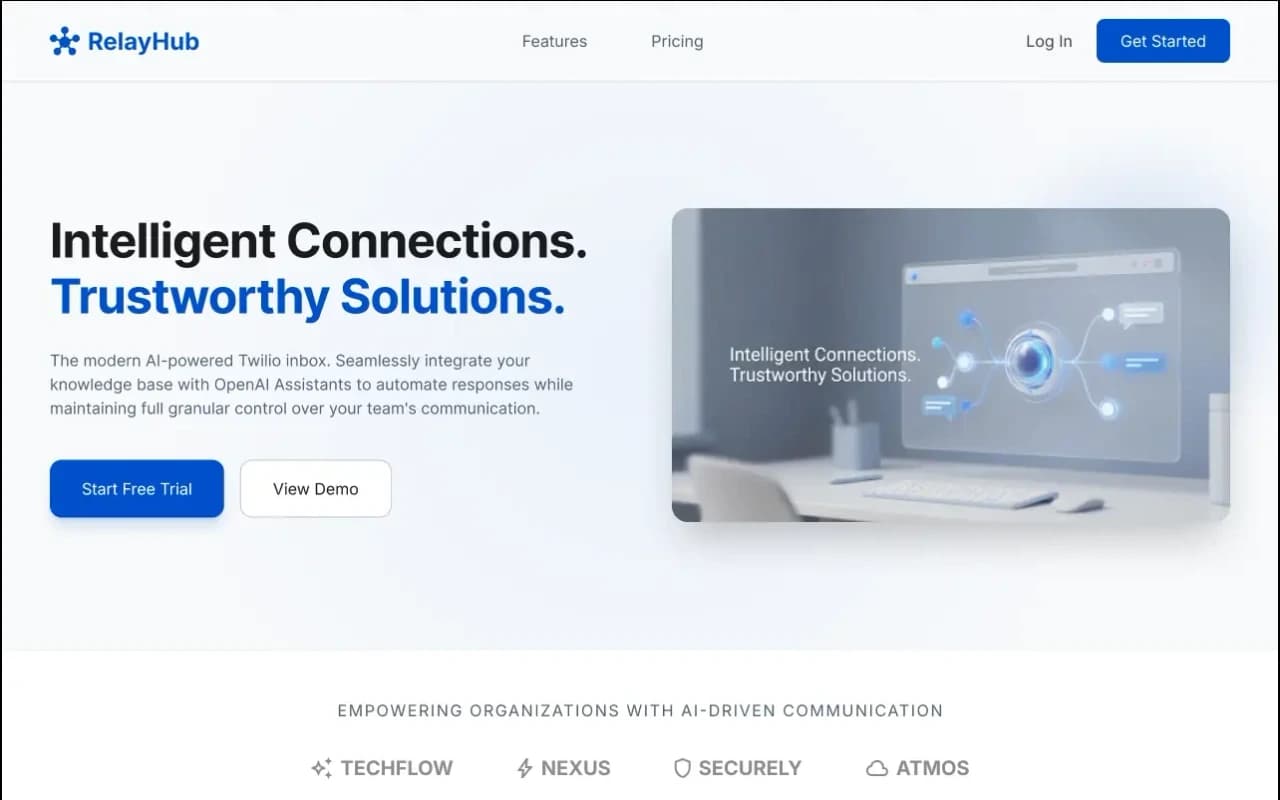
RelayHub started from a blunt observation: phone and chat should not live in separate tools. Sales and support kept losing the thread when a caller switched to SMS or a chat widget. The brief was one shared inbox. Twilio traffic and digital messages land together. AI clears the routine work so people only jump in when judgment matters. Teams also needed to steer the assistant without shipping a new build every time the script changed. Admin-controlled prompts per contact group were in the brief from day one. File digests mattered too. Long PDFs and call notes piled up unread. The product needed a path from upload to a short summary the whole group could scan before the next shift. Nobody on the project believed every reply should be fully automated. Refund fights, tone-sensitive replies, and messy exceptions still need a human. RelayHub uses OpenAI to draft, summarize, and clear the easy queue so senior staff spend time on work that actually needs them.

RouteMind: fleet dispatch that cuts empty miles
AI fleet advisor + live load board
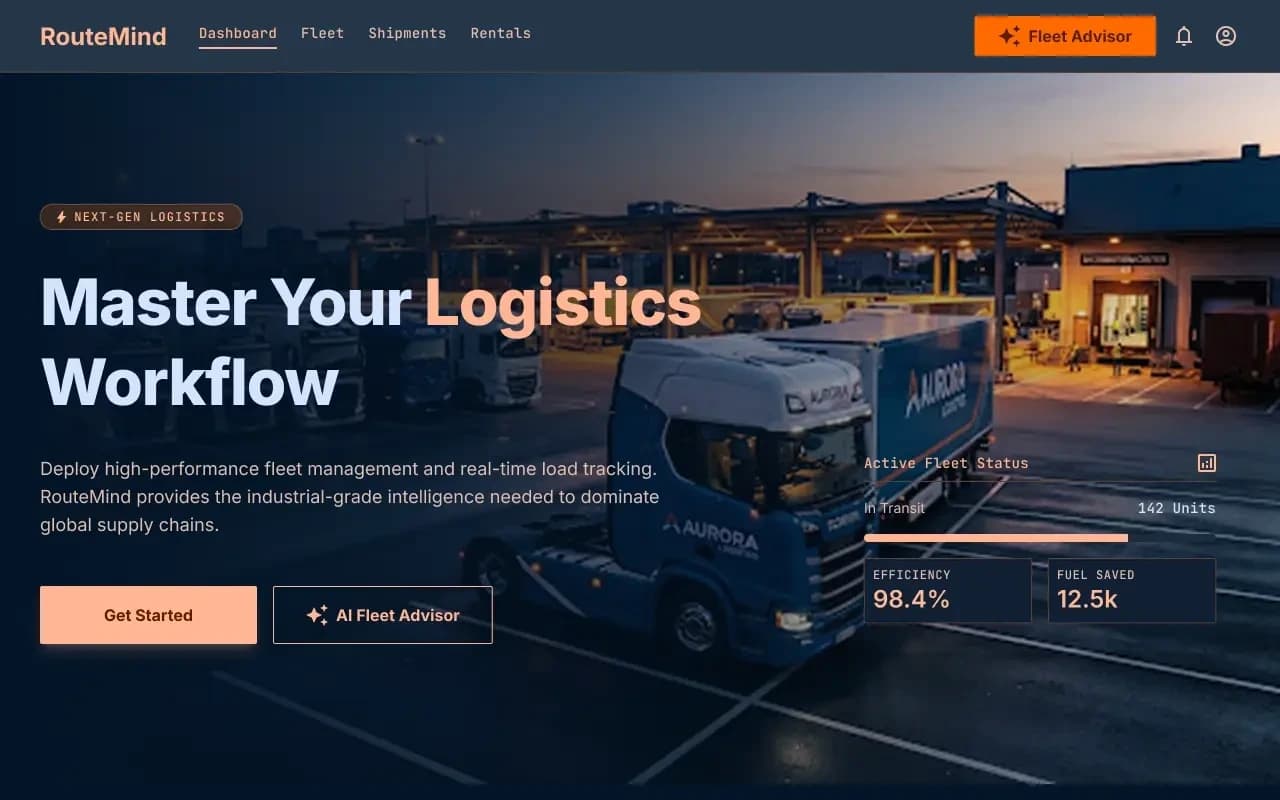
RouteMind exists so shippers and carriers can see loads, capacity, and routes in one place. Dispatch should cost less time and fewer wasted miles. The product pairs a live load board with an AI Fleet Advisor. Planners match freight to available trucks and compare paths with real map data instead of gut feel. Empty miles and stale boards were the business pain. When capacity is a guess, trucks deadhead and fuel burns for no revenue. Status, distance, and advisor guidance had to show up in the tools dispatchers already live in. Another spreadsheet export at the end of the shift was not going to cut it. Dispatchers needed advice that respected current capacity, not a generic logistics chatbot. The Fleet Advisor had to read live loads and vehicle state, then suggest moves a planner could accept or reject in the same UI. RouteMind was never meant to replace judgment. It was meant to cut the time spent assembling the picture before judgment starts.

Loom & Luxe: rent the dress, skip the full retail bill
Rentals, deposits, and return logistics
Loom & Luxe makes designer dresses reachable for short events. Shoppers browse an editorial catalog, book a rental window, pay a fraction of retail, and get pickup handled when the window closes. Owners and brands need inventory, active rentals, and earnings in one lender dashboard instead of side chats and spreadsheets. The business needed rental commerce that feels like shopping, not a form dump. Deposits, delivery addresses, and returns had to be productized. If those steps stay manual, the marketplace cannot grow past a handful of garments and a very patient ops person. Trust sits at the center. Renters need deposits and holds that feel fair. Lenders need payouts and inventory status they can verify. Both sides had to feel comfortable putting real garments and real event dates into the system, not treating it like a weekend experiment. The storefront had to feel like fashion retail while the backend behaved like a logistics system. Pretty pages without return automation fail. Automation without an editorial catalog fails too. That tension is the real product.
Stack
We work in your tools
React, Next.js, Python, .NET, Flutter, AWS, Azure, Kubernetes, OpenAI. We pick tools that fit your architecture.
What kind of software company is Algo Vortex?
Algo Vortex is a custom software development company in Lahore, Pakistan. Since 2017 we have built web, mobile, SaaS, cloud, and AI products, and staffed dedicated offshore teams for companies that need to keep shipping across time zones. The office is in Gulberg III. Clients sit in the US, UK, UAE, Saudi Arabia, Canada, Australia, Europe, and the wider Middle East.
The work is production software, not a slide about future capability. Named engineers join your tools, or a dedicated squad owns a product slice. The people who learn the system stay on it. That is the difference between a vendor queue and a satellite team you can put on-call.
If you need a map of capabilities, start at services. If you need proof, the case studies show RelayHub, RouteMind, Loom & Luxe, QuizQuest, and Gusto with screens and stacks. Question-led guides live under insights.
What do you actually build?
Most briefs are a product that has to run every day: a SaaS app with auth and billing, a mobile client that has to survive store review, an AI feature that must work after the demo, or cloud paths that currently live on one laptop. Custom software, web and mobile, and AI development cover those jobs.
Cloud and DevOps, UI/UX, and QA and security sit beside the build so releases are not a prayer. When the decision itself is unclear, digital strategy consulting maps build-versus-buy before you hire a squad.
AI work is usually inside an existing app, not a toy chat on a landing page. How to add AI to an existing product is the honest version of that. Agents, RAG, and MCP have their own guides when the search is a question, not a service brochure.
How do you engage, from Lahore, with a US or UK team?
Delivery is remote-first from Lahore with planned overlap hours. English is the working language. Status and decisions stay written so a timezone gap does not become a silent blocker. Async hours move implementation. Architecture calls sit in the overlap window.
Staff augmentation embeds seniors into your standups when you already own the backlog. A dedicated team or offshore development center fits a multi-quarter roadmap that needs ownership, not another short SOW. Fixed-scope builds fit when the brief is already clear.
Code lives in your repos. IP for work you fund transfers under the contract. NDAs come before sensitive systems open. Overlap with US East against Pakistan 9 to 5 is a real constraint. The timezone overlap planner shows the shared block. The QR generator is for a branded link, a staff vCard, or office WiFi.
Who is this for, and who should skip us?
Strong fit is a product or platform with users, constraints, and someone on your side who can accept trade-offs. Startups with a funded first release, and enterprises that need capacity without ballooning local payroll, are the usual pattern. Domains we see often: SaaS, fintech, logistics, healthcare workflows, e-commerce, edtech.
Poor fit is a vague wishlist with no owner, or a brochure site a template would finish faster. We will say so. Continuity is the pitch. If you want a new face on every ticket, we are the wrong vendor.
Ready to map a first slice? Send the job, the stack, and what done means on the contact page. Rough notes beat a polished deck. We reply within one business day.
Questions before you write
Longer answers live on the FAQ page. Guides sit under insights. Ready? Contact Algo Vortex.
Want to talk through a build?
Need a dedicated team or a clear project plan? We match engineers to your stack and put a first plan on the calendar.
Get in touch