

How an engagement runs
- 01
Frame the decision
Clarify the business question, constraints, and what a good answer must include for your stakeholders.
- 02
Examine the evidence
Code, architecture, metrics, vendor contracts, and interviews. Assumptions get pressure-tested.
- 03
Options and recommendation
Realistic options with cost bands, risks, and a clear recommendation, including dissent where it matters.
- 04
Roadmap and next moves
A sequenced plan with owners. Optional follow-on build or staffing if you want the same team to execute.
When do you need a clear engineering plan first?
Digital strategy consulting turns product goals, technical evidence, and business constraints into a software plan. It helps leaders decide whether to build or buy, rebuild or refactor, hire or outsource, change cloud architecture, or sequence an AI investment. The output is a recommendation, owners, risks, and ordered next steps.
Advice stays concrete. Decisions, owners, and a sequenced plan leave with you, not a 90-page PDF nobody opens again. Recommendations stay grounded in stacks we actually ship. A fashion architecture we would refuse to maintain if you asked us to build it next month will not get recommended.
Fits product and engineering leaders who need candor about cost bands and timeline ranges, including when the answer is do less or buy this part. If you already know the build and only need hands, skip consulting and go straight to a delivery model. That gets said in the first call when it is obvious.
What do you leave with after consulting?
Typical deliverables include architecture assessments, target-state options with trade-offs, delivery roadmaps tied to business milestones, team shape recommendations, and RFP or vendor evaluation help when you are buying instead of building. Discovery for upcoming builds runs too: personas, must-have scope, risk register, and a budget band you can take to finance without theater.
Written decision logs come with the work. A readout meeting alone fades fast. Assumptions are listed. Deferred items are deferred on purpose. If AI is on the table, demos get separated from production requirements. Data access, evaluation, cost, and ownership after launch sit in that list.
When the question is staffing, staff augmentation, dedicated team, fixed-price project, and offshore development center shapes get compared against your roadmap stability and internal ownership. The point is a plan you can fund and staff, not a buzzword map.
How does a consulting engagement run?
Short engagements start with document review and stakeholder interviews, then working sessions that force decisions on the table. What was decided and what was deferred on purpose gets written down. Sessions run on overlap hours with recordings for people who could not attend.
If you want execution afterward, the consulting output becomes the kickoff package for a build, augmentation, or ODC conversation. No second discovery tax if you continue with us. Continuity is optional. Fit to execute gets said plainly, and so does the case where you are better served buying a tool or hiring in-house.
Workshops are designed to produce decisions in the room. Options get timeboxed, trade-offs get forced onto one page, and owners leave named. If a stakeholder cannot attend live, the written decision log still reaches them so the project does not restart from rumor.
What stacks does the advice cover?
Advice stays grounded in stacks we ship: React and Next.js products, Node and Python services, cloud on AWS and peers, mobile with Flutter or React Native, and AI features that have to clear production bars. Architecture decision records and lightweight risk scoring keep the trail readable for non-engineering stakeholders.
Code, metrics, vendor contracts, and org constraints get pressure-tested. Perfect documentation is not required. Honest constraints on budget and dates are. Roadmaps stay sequenced by dependency and risk, not by who spoke loudest in the workshop. When numbers are soft, they get labeled as ranges with a note on what would tighten them.
Which decisions show up in consulting briefs?
SaaS scaling questions, fintech platform choices, healthcare workflow digitization, commerce modernization, and logistics operations are common briefs. Facilitation adapts to your regulatory and buying reality without pretending every market needs the same playbook. Board-ready summaries stay short; the working artifacts stay detailed enough for your tech lead to act.
Related case studies: RouteMind.
Why hire Algo Vortex for strategy work?
Leaders hire Algo Vortex when they want consultants who still ship software. Advice comes from delivery scars more than from frameworks in a slide library. Straight talk on cost and timeline ranges, and a clear line between what gets recommended and what we would be willing to build.
Remote consulting for US, UK, UAE, and other international clients runs under NDA. If you continue into delivery, the same people can carry context into a dedicated team, staff augmentation, fixed build, or offshore development center. Review RouteMind, then contact us with the decision and deadline.
Technologies we use
Stack
- Architecture review
- AWS
- Azure
- React
- Next.js
- Node.js
- Python
- PostgreSQL
- OpenAI
- Kubernetes
Common industries
- SaaS
- Fintech
- Healthcare
- E-commerce
- Logistics
- Public Sector
Proof
Related case studies
Live products where this capability showed up in the build.
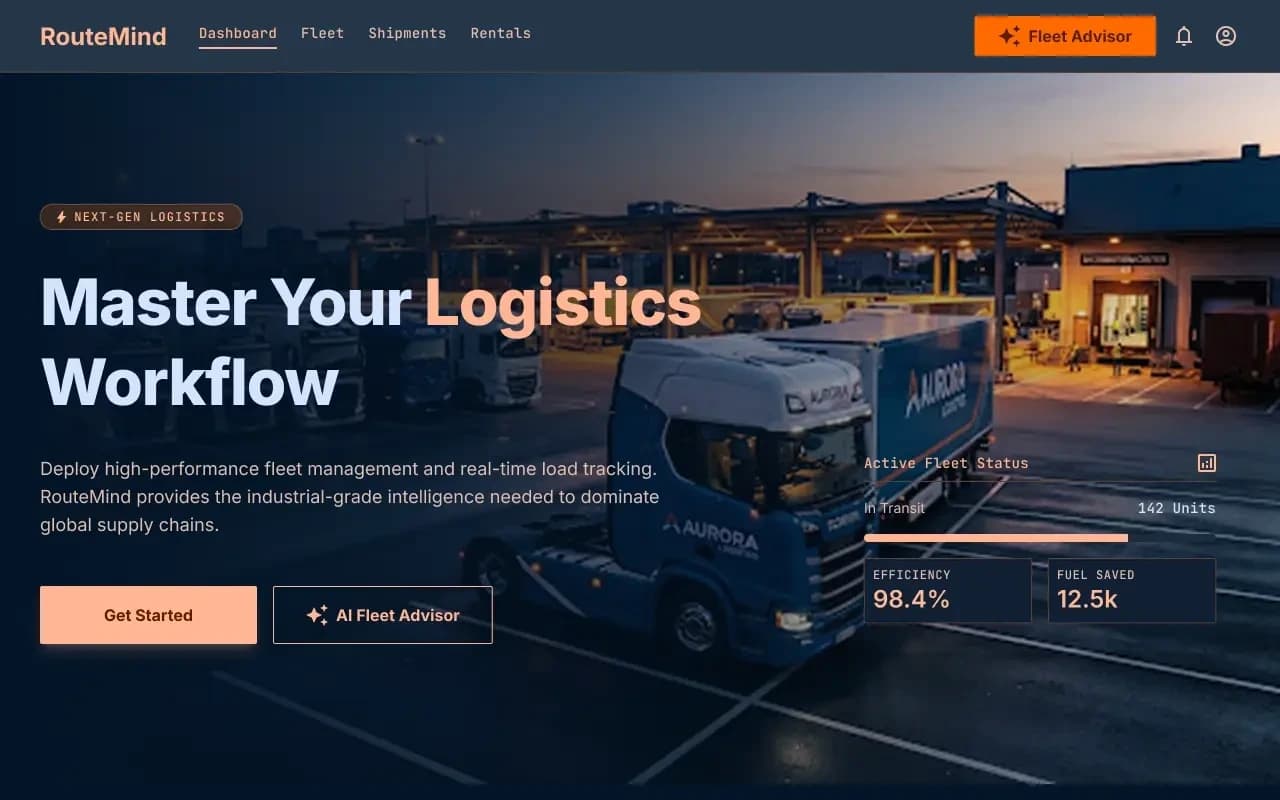
Shipper load board and fleet dashboard on one ops model, with an AI advisor that reads live capacity before suggesting the next move.
Capabilities
Related capabilities
Custom Software Development
From discovery through production releases, we build the systems your business actually runs on.
AI & Data Innovation
Generative AI, ML, and data pipelines that land in products people use, not pilots that die on a slide deck.
Staff Augmentation
Senior engineers and QA who join your tools and rituals in days, not after a months-long hire.
FAQ
Questions about this service
More engagement and IP questions live on the FAQ page. For a lasting dedicated unit, read the Offshore Development Center guide. Ready to talk? Contact Algo Vortex.