

Key takeaways
Key takeaways
0401
Estimate a product, not a label
An internal tool and a multi-tenant SaaS can share a stack yet require very different teams, integrations, and release work.
02
Two bills
You pay to build, then you pay to run. Hosting, stores, and a retainer do not stop when the repo is tagged.
03
Integrations dominate
UI is visible. Payments, identity, and vendor APIs usually eat more of the budget.
04
Discovery sets the number
Ranges move with data migration, compliance, and how many roles the first release must serve.
What does custom software development cost in 2026?
Custom software development cost depends on the first release you need, the systems it must connect to, and the data it must inherit. A focused internal tool sits at one end; a marketplace or phased platform rewrite sits at the other. Treat published ranges as planning boundaries, then test them through discovery.
These are delivery ranges for a first production version, not a perpetual license and not a per-seat SaaS fee. They assume a partner that designs the system, ships it in your repos, and leaves you with tests and a runbook. A weekend prototype is cheaper. It is also not what this page is about.
Ongoing hosting and maintenance are separate. Plan on a slice of the build each year for ops, dependency updates, and small change. Design that in discovery or finance will meet it as a surprise.
Typical custom-build bands in 2026, USD, first production version
Kind of system
Internal ops tool
Typical build range
$40,000 to $90,000
What you usually get
One job, roles, audit, a few integrations
Kind of system
Custom CRM-shaped system
Typical build range
$50,000 to $150,000
What you usually get
Pipeline, records, permissions, email or calendar hooks
Kind of system
Multi-tenant SaaS MVP
Typical build range
$80,000 to $250,000
What you usually get
Tenancy, billing hooks, admin, one core workflow
Kind of system
Marketplace
Typical build range
$150,000 to $400,000
What you usually get
Two-sided flows, payments, listings, basic logistics
Kind of system
Product rewrite or platform
Typical build range
$200,000 to $500,000+
What you usually get
Phased cutover, data migration, parallel run
| Kind of system | Typical build range | What you usually get |
|---|---|---|
| Internal ops tool | $40,000 to $90,000 | One job, roles, audit, a few integrations |
| Custom CRM-shaped system | $50,000 to $150,000 | Pipeline, records, permissions, email or calendar hooks |
| Multi-tenant SaaS MVP | $80,000 to $250,000 | Tenancy, billing hooks, admin, one core workflow |
| Marketplace | $150,000 to $400,000 | Two-sided flows, payments, listings, basic logistics |
| Product rewrite or platform | $200,000 to $500,000+ | Phased cutover, data migration, parallel run |
What moves the number?
Integrations move it more than the UI. Payments, SSO, a warehouse, a carrier API. Each vendor has edge cases that do not show up in the sales deck. Count them in discovery.
Data migration moves it. Spreadsheets with no keys, a CRM with duplicate accounts, files with no types. The first slice should include a real sample, not a happy-path CSV.
Compliance and multi-tenancy add design, not only checkboxes. Isolation, audit, and entitlements belong in the first architecture if you will need them in year two. Retrofitting tenancy is a second project.
The number of user roles in the first release moves it in a way most briefs underestimate. One role is a form. Three roles with different permissions, different dashboards, and different notification rules is roughly three products sharing a database. Cutting the first release to one role is the single cheapest scope decision available to you.
Finally, decision speed moves it. A team waiting four days for an answer on a data model question burns budget doing nothing useful. This is not a line item anyone quotes, and it is one of the largest real differences between a project that lands inside its band and one that does not.
Fixed price, time and materials, or a dedicated team?
The commercial shape changes the number as much as the scope does. Fixed price puts the risk on the vendor, so the vendor prices that risk in. Expect a premium of roughly fifteen to thirty percent over the same work billed hourly, and expect a change-request process because the vendor has to defend the boundary. Fixed price works when the scope is genuinely well understood, which usually means after a discovery phase rather than before one.
Time and materials removes the premium and puts the risk on you. It is the honest choice when the requirements will move, which on a first version they always do. The failure mode is an open meter with no forecast, so insist on a sprint-level estimate and a running burn report even though the contract does not require one.
A dedicated team retainer is a monthly cost for a fixed set of people. It suits a roadmap that keeps going rather than a project that ends. The advantage is that the team stops re-learning your system every engagement. The trap is paying for a squad while the roadmap is thin, so match the headcount to actual throughput rather than to ambition.
Most builds in the bands above run best as a paid discovery, then a fixed price on the first slice, then a retainer once the thing is live. That sequence prices risk where it actually sits at each stage.
How the commercial model changes the number
Model
Fixed price
Who carries scope risk
Vendor
Cost effect
15 to 30 percent premium
Best fit
Well-scoped slice after discovery
Model
Time and materials
Who carries scope risk
Client
Cost effect
No premium, no ceiling
Best fit
First version, moving requirements
Model
Dedicated team retainer
Who carries scope risk
Shared
Cost effect
Predictable monthly
Best fit
Ongoing roadmap after launch
Model
Paid discovery
Who carries scope risk
Vendor
Cost effect
$8,000 to $25,000
Best fit
Before committing to any of the above
| Model | Who carries scope risk | Cost effect | Best fit |
|---|---|---|---|
| Fixed price | Vendor | 15 to 30 percent premium | Well-scoped slice after discovery |
| Time and materials | Client | No premium, no ceiling | First version, moving requirements |
| Dedicated team retainer | Shared | Predictable monthly | Ongoing roadmap after launch |
| Paid discovery | Vendor | $8,000 to $25,000 | Before committing to any of the above |
Where does the money actually go?
The bands are not arbitrary. They are a squad size multiplied by a duration multiplied by a blended rate, and you can reconstruct any quote from those three numbers. A typical first-version squad is one tech lead, two to three engineers, a designer for the first third of the project, and a QA engineer for the last two thirds, with a delivery lead across the whole thing at partial allocation.
That squad is roughly four to five full-time equivalents. Run it for four months at a blended offshore rate and you land in the SaaS MVP band. Run the same shape in a US or Western European market and the same four months costs three to four times more, which is the entire economic argument for offshore delivery and also the reason rate alone is a bad way to compare vendors.
Engineering is usually sixty to seventy percent of the build. Design is ten to fifteen on a product with real user-facing surface, less on an internal tool. QA is ten to fifteen. Project management and the discovery work are the rest. If a quote shows engineering at ninety percent of the cost, ask who is doing the testing and the coordination, because somebody has to and unbilled work tends to become skipped work.
For a per-role view of what a squad costs monthly, dedicated development team cost breaks it down, and offshore development rates in Pakistan covers the rate side specifically.
How do build cost and run cost differ?
The build is the team that designs, ships, and hardens the first version. The run is hosting, stores, third-party fees, and the people who patch and extend it. Mixing those into one number hides the meter.
A small internal tool can run cheaply. A SaaS with media, maps, or AI features will not. AI agent development cost covers the model meter if that is in scope. This page is the software around it.
Use the table as a map. Then a short discovery. A number from a blog without your integrations is entertainment.
As a planning figure, budget fifteen to twenty-five percent of the original build each year to keep a system healthy. That covers dependency and framework upgrades, security patches, cloud costs, and the small changes that arrive once real users have opinions. Systems that skip this do not stay still, they decay, and the eventual catch-up costs more than the annual spend would have.
How do you genuinely reduce the cost?
Cut roles before you cut features. A first release that serves one user type well is cheaper and more useful than one that serves three user types badly. You learn more from it too, because the feedback is not averaged across audiences with different needs.
Buy the commodity parts. Authentication, payments, email delivery, file storage, and search are solved problems with good vendors. Building them yourself is the most common way a team spends thirty thousand dollars proving something that was available for a subscription. Save custom work for the thing that is actually specific to your business.
Bring your data in order before the build starts. Cleaning a customer list is work someone on your team can do without engineering rates attached. Handing a partner a clean export instead of four inconsistent spreadsheets removes real weeks from a migration.
Do a paid discovery. It feels like paying for something that is not the product, and it consistently pays for itself by turning a guess into a scope. The alternative is a fixed price built on assumptions, which is where change requests come from.
What does not reduce cost: choosing the cheapest hourly rate, skipping tests, skipping QA, or compressing the timeline. Each of those moves the cost to a later date and usually increases it. Vibe coding vs professional development covers the version of this that has become popular recently.
How do you read a quote that looks too cheap?
A quote at a third of the band is not a bargain, it is a different scope. Usually it excludes QA, excludes any real integration work, assumes one happy path, and assumes your data is clean. None of that is dishonest if it is written down. It becomes a problem when the exclusions live in the vendor's head rather than the document.
Ask four questions of any low quote. What is explicitly out of scope. Who writes and runs the tests. What happens to the price when an integration turns out to have edge cases. And who owns the repository and the infrastructure accounts on day one.
The answers tell you whether you are comparing two prices for the same work or two prices for different work. Most of the time it is the latter. How to choose a software development company covers the rest of the diligence.
How should you use these ranges?
Pick the row that matches the first production version, not the five-year vision. Fund a slice that users can touch. If you need the buying filter, read how to choose a software development company.
Algo Vortex quotes after we have seen the job. We deliver from Lahore. The range still depends on scope, not on a slogan about offshore rates. Send the current system and the outcome on contact.
The commercial page is custom software development. This article does not belong in a service FAQ. Service pages stay free of dollar bands on purpose.
Next step
Need a realistic range for your first release?
Send the workflow, integrations, data sources, and release goal. We will map the brief to a practical first slice and explain what drives the estimate.
Talk to Algo VortexSame cluster
Related in this cluster
Custom software development
Custom software earns its keep when your workflow does not fit a vendor tool, or when that workflow is the product customers buy. Here is how to decide, what a serious engagement includes, and how to ship something your team can still run after launch.
SaaS development
SaaS development includes the product people pay for and the rails that keep each customer separate: tenancy, billing, permissions, support tools, and controlled releases. A credible MVP pairs those basics with one workflow that solves a painful job. Everything else can wait.
Custom CRM development
Custom CRM development makes sense when your records, pricing, permissions, or fulfillment flow cannot fit a standard CRM without constant manual work. The goal is not to copy Salesforce. It is to build the smallest system that reflects how your team actually sells and serves customers.
How to choose a software development company
Choose a software partner by checking what still runs after launch, who owns the code, and how the team behaves when work goes wrong. Stack lists and logo walls tell you little. Production evidence, a paid trial, and clear exit terms tell you much more.
Capabilities
Related capabilities
Proof
Related case studies
Live products where this kind of work showed up in the build.
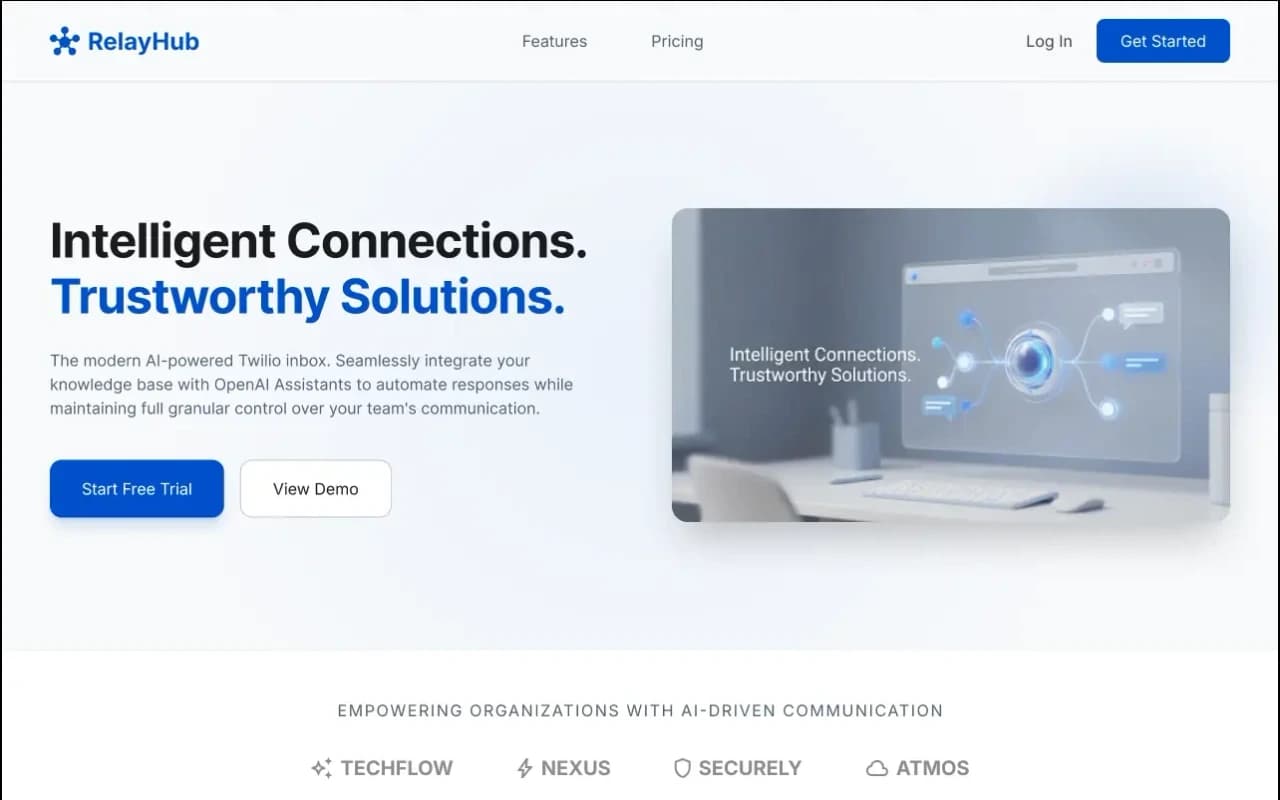
One triage view for Twilio phone and digital threads, with OpenAI drafts under admin prompts. Built for teams tired of rebuilding context across tools.

Editorial catalog with Stripe holds and automated return pickup. Lender dashboard keeps inventory and earnings honest for both sides.
FAQ
Questions
More on all insights, custom software, or contact Algo Vortex.