
Delivery
Nearshore vs offshore development
Nearshore buys overlap hours and charges a premium for them. Offshore buys rate and charges you in coordination. The right answer depends on how much of your work genuinely needs a live conversation.
By Umar HayatChief Technology Officer, Algo Vortex
Key takeaways
You are buying overlap, not distance
Nearshore is a timezone decision wearing a geography label. The premium is for shared working hours.
The premium is real and quantifiable
Expect nearshore to run 40 to 80 percent above comparable offshore rates for similar seniority.
Sync-heavy work justifies it
Early discovery and anything with a live incident response need overlap. Well-specified delivery work does not.
Offshore works when you write things down
The teams that succeed offshore have decision logs and real specs. That habit is what the rate saving actually costs.
What do nearshore and offshore actually mean?
Nearshore means a delivery team in a country close enough to share most of your working day. For a US company that is Mexico, Colombia, Argentina, Brazil, or Costa Rica. For a Western European company it is Poland, Romania, Portugal, or increasingly Morocco and Egypt.
Offshore means far enough away that the working days barely intersect. For a US company that is South Asia, Southeast Asia, and Eastern Europe. For a European company it is South Asia and Southeast Asia, since Eastern Europe is nearshore from there.
Notice that the same country changes category depending on where you sit. Poland is nearshore to Germany and offshore to California. That is the clue that this is a timezone decision rather than a geographic one, and it is why generic advice about nearshore versus offshore is usually useless. The only version that means anything is specific to your city.
What does each option cost and what overlap do you get?
Take a US East Coast company as the reference. Nearshore in Latin America runs roughly $35 to $70 an hour for mid to senior engineering and gives you six to eight shared hours on standard workdays. Offshore in South Asia runs roughly $22 to $50 and gives you nothing on standard workdays, requiring a shift on one side to reach three or four hours.
For a Western European company the picture inverts. Eastern Europe at $40 to $80 shares almost the entire working day. South Asia at $22 to $50 already shares three to four hours with the UK without anyone shifting, which makes offshore substantially more viable from Europe than it is from the US.
So the premium is roughly forty to eighty percent for comparable seniority, and what it buys is between three and six additional shared hours. Whether that is good value is a question about your work, not about the vendors.
The timezone overlap planner gives you the real number for your specific pairing, and offshore development rates in Pakistan covers the offshore rate side in detail.
Rate and overlap by region, from a US East Coast reference point
Region
Latin America
Hourly
$35 to $70
Shared hours, standard days
6 to 8
Category
Nearshore
Region
Eastern Europe
Hourly
$40 to $80
Shared hours, standard days
2 to 4
Category
Neither cleanly
Region
Pakistan and India
Hourly
$22 to $55
Shared hours, standard days
0, needs a shift
Category
Offshore
Region
Philippines
Hourly
$20 to $45
Shared hours, standard days
0, needs a shift
Category
Offshore
Region
US domestic
Hourly
$100 to $200
Shared hours, standard days
8
Category
Onshore
| Region | Hourly | Shared hours, standard days | Category |
|---|---|---|---|
| Latin America | $35 to $70 | 6 to 8 | Nearshore |
| Eastern Europe | $40 to $80 | 2 to 4 | Neither cleanly |
| Pakistan and India | $22 to $55 | 0, needs a shift | Offshore |
| Philippines | $20 to $45 | 0, needs a shift | Offshore |
| US domestic | $100 to $200 | 8 | Onshore |
When is the nearshore premium worth paying?
When the work is genuinely synchronous. Early product discovery, where the requirement changes after each customer conversation, is the clearest case. So is anything with live incident response, where a two-hour delay in reaching an engineer has a cost you can name.
When your own practices are weak. This is the honest and unpopular reason. Offshore delivery depends on written specifications, decision logs, and asynchronous review. If your organisation does not work that way today, nearshore lets you keep operating as you are and pay for the privilege. That is a legitimate trade as long as you make it deliberately rather than discovering it four months in.
When something requires occasional physical presence. A workshop, a client site visit, or a hardware element. A four-hour flight and a shared afternoon is a different proposition from a twenty-hour journey.
When the team is small and senior. Three senior engineers who need to think together benefit more from live conversation than fifteen engineers working through a specified backlog do.
When does offshore make more sense?
When the scope is understood and the work is substantial. Migrations, integrations, test coverage, platform maintenance, and feature work against a clear specification all travel well. These do not need a live conversation, they need capacity and clear requirements.
When budget is the binding constraint. The forty to eighty percent difference is not marginal. On a squad of five over a year it is the difference between shipping the roadmap and shipping part of it, and if the alternative is not building the thing then the comparison is not close.
When you already work asynchronously. Distributed companies that write things down have most of the cost of offshore already paid. For them the rate saving is close to free, which is why remote-native organisations use offshore delivery more successfully than co-located ones do.
When the depth of the talent pool matters. South Asia has a larger bench for product engineering than most nearshore markets, which shows up when you need to scale a team quickly or need a specific specialisation.
Can you run both?
Yes, and larger engineering organisations commonly do. The split that works is by work type rather than by seniority: nearshore or onshore holds the roles that need constant live contact, meaning architecture, product, and incident response, while offshore holds delivery capacity on well-specified streams.
The rule for making it work is the same as any distributed setup. Give each location whole slices with clear interfaces, never split a single feature across two timezones. Coordination cost on a shared feature reliably exceeds whatever the rate difference was.
The mistake to avoid is a hierarchy where nearshore engineers direct offshore engineers who are treated as implementers. It produces resentment, it wastes the offshore team's judgement, and the specifications get worse because the people writing them are not the people who will discover the edge cases.
Offshore vs in-house development covers the version of this comparison against hiring locally, and staff augmentation vs outsourcing covers which engagement shape to use in either location.
How do you decide quickly?
Estimate what share of your engineering work genuinely needs a live conversation. Not what feels comfortable, what actually requires it. For most teams past the early product stage the honest answer is under twenty percent, and that work can be concentrated into a shared window.
If the answer is above half, pay for nearshore. If it is under a fifth, offshore will work provided you build the written practice. In between, run the hybrid split above.
Then check the arithmetic on your specific pairing rather than trusting the category. A US East Coast company gets three to four workable hours with Pakistan by shifting one window, which is enough for a daily decision block. A US West Coast company faces twelve to thirteen hours and a genuinely harder problem. Those are different situations that the word offshore hides.
Next step
Want the overlap math for your city?
Tell us where your team sits and what share of the work needs a live conversation. We will show the real shared hours and say honestly when nearshore is the better buy.
Talk to Algo VortexRelated in this cluster
- Offshore vs in-house developmentThe comparison boards usually run is a salary against an hourly rate, and it is the wrong comparison. Run the fully loaded number on both sides and the answer often flips.
- Offshore development rates in PakistanHourly rates from Pakistan sit well below Western markets and slightly below India. Here are the 2026 ranges by role and seniority, why the spread is so wide, and what a rate at the very bottom usually means.
- Staff augmentation vs outsourcingThese two get used as synonyms and they are not. One adds people to a team you run. The other hands a whole outcome to somebody else. Picking the wrong one is where most vendor relationships go wrong.
- Dedicated development team costA dedicated team is a monthly bill, not a project quote. Here is what the common squad shapes cost, what the rate actually covers, and the clauses that change the number more than the rate does.
Related capabilities
Related case studies
Live products where this kind of work showed up in the build.
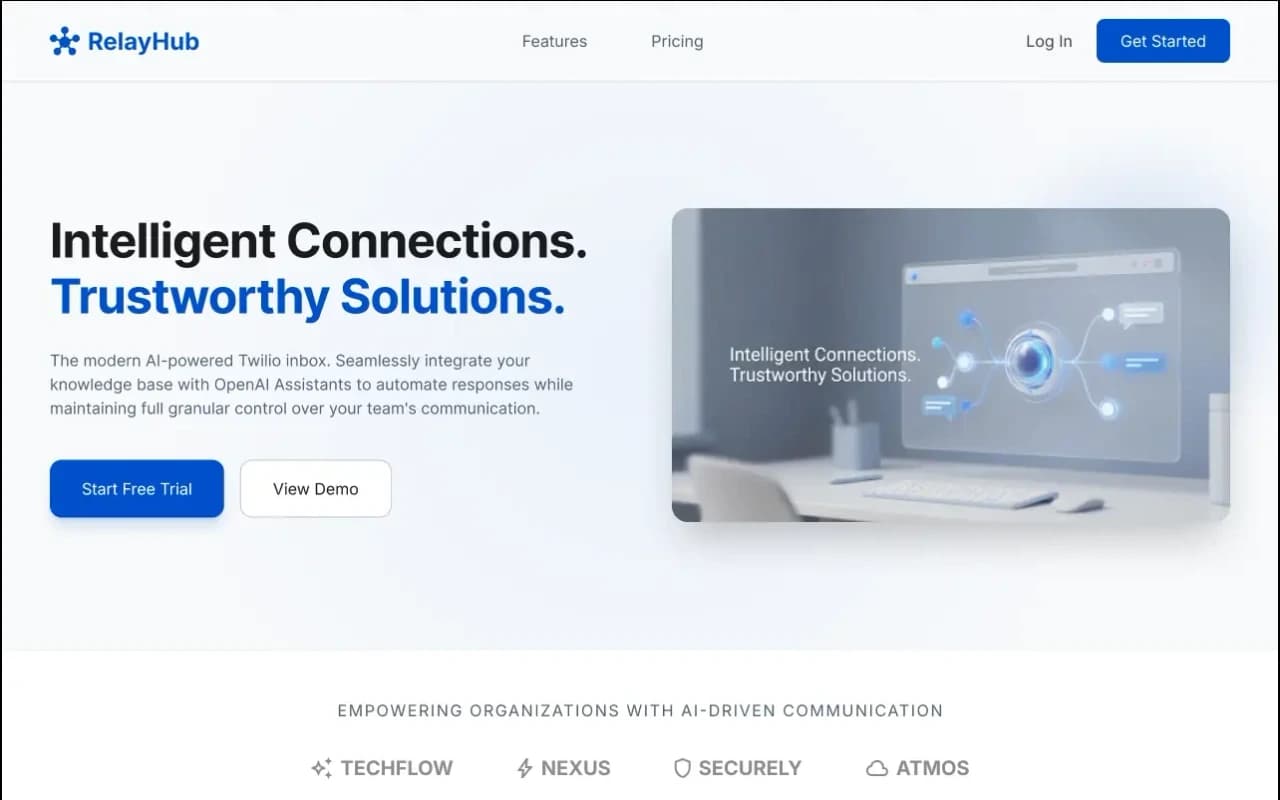
Twilio + OpenAI inbox automation
RelayHub started from a blunt observation: phone and chat should not live in separate tools. Sales and support kept losing the thread when a caller switched to SMS or a chat widget. The brief was one shared inbox. Twilio traffic and digital messages land together. AI clears the routine work so people only jump in when judgment matters. Teams also needed to steer the assistant without shipping a new build every time the script changed. Admin-controlled prompts per contact group were in the brief from day one. File digests mattered too. Long PDFs and call notes piled up unread. The product needed a path from upload to a short summary the whole group could scan before the next shift. Nobody on the project believed every reply should be fully automated. Refund fights, tone-sensitive replies, and messy exceptions still need a human. RelayHub uses OpenAI to draft, summarize, and clear the easy queue so senior staff spend time on work that actually needs them.
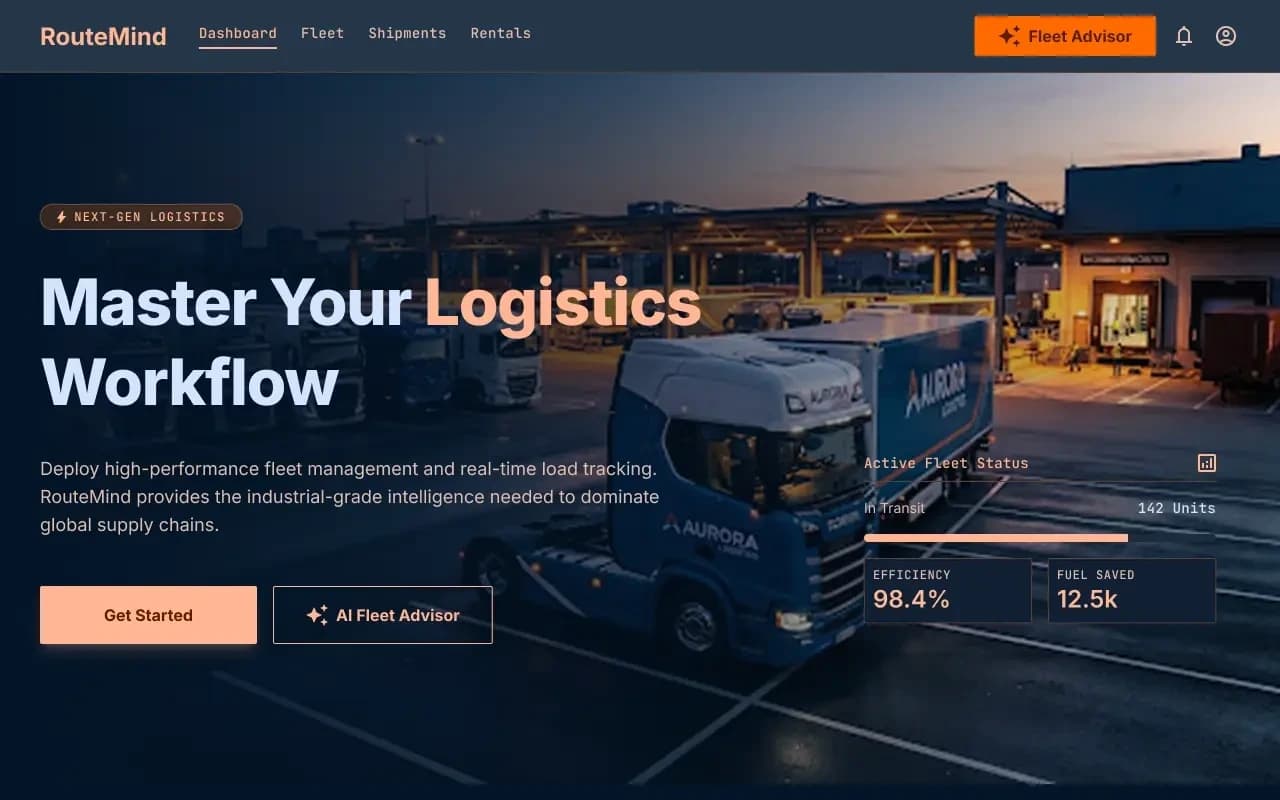
RouteMind: fleet dispatch that cuts empty miles
AI fleet advisor + live load board
RouteMind exists so shippers and carriers can see loads, capacity, and routes in one place. Dispatch should cost less time and fewer wasted miles. The product pairs a live load board with an AI Fleet Advisor. Planners match freight to available trucks and compare paths with real map data instead of gut feel. Empty miles and stale boards were the business pain. When capacity is a guess, trucks deadhead and fuel burns for no revenue. Status, distance, and advisor guidance had to show up in the tools dispatchers already live in. Another spreadsheet export at the end of the shift was not going to cut it. Dispatchers needed advice that respected current capacity, not a generic logistics chatbot. The Fleet Advisor had to read live loads and vehicle state, then suggest moves a planner could accept or reject in the same UI. RouteMind was never meant to replace judgment. It was meant to cut the time spent assembling the picture before judgment starts.
Questions
More on all insights, AI development, or contact Algo Vortex.