

Key takeaways
Key takeaways
0401
Job first
A good partner starts from the workflow and the data, not from a model brand. If they lead with the logo, keep walking.
02
PoC is not production
Ask how they harden a slice: evals, auth, cost caps, fallbacks. A notebook is not a launch.
03
Good partners challenge the brief
A credible team will recommend rules, search, or a smaller feature when an agent adds cost without improving the job.
04
Who stays after launch
Prompts drift. Providers change. You need named people and a maintenance path, not a zip of mysteries.
What should you define before contacting an AI company?
Write down the job, the user, the systems involved, and what a good outcome looks like on ten real examples. That brief is how you tell a serious AI development company from a slide shop. If you cannot name the job yet, you need strategy help, not a build crew.
Bring constraints too: data you may use, data you may not, latency, and whether the feature may write. Partners who skip that and jump to architecture are guessing with your budget. Digital strategy consulting exists for the cases where the decision itself is the work.
You do not need a 40-page RFP. You need honesty about volume, failure cost, and who on your side will review output. No owner on your side is a red flag even if the vendor is strong.
How can you spot a production-ready AI team?
A production-ready AI team can explain what happens after the happy-path demo. Look for evaluation sets, logging, rate limits, a kill switch, and a plan for provider outages. If those controls are postponed until later, your team will inherit the risk when the first real failure occurs.
A PoC is a valid first buy when the question is can retrieval work on our PDFs or can the model extract these fields. Treat it as a paid question, with a written end. Converting a notebook into a product is a second project. Partners who blur those quotes are selling hope.
Look at shipped work. RelayHub and RouteMind are products with AI inside a real UI, not a chat widget on a landing page. Ask for that kind of artifact: screens, failure handling, who operates it.
Which AI development skills should a partner have?
An AI development partner should understand retrieval, tool-calling agents, data pipelines, and integration with an existing application. Fine-tuning is useful for narrower cases than many vendors suggest. A capable team can explain when retrieval, direct tools, prompt changes, or conventional software best fit your workflow.
Agents need tool design, permissions, and human review, not only a planner prompt. Read AI agent development so you can hear whether they are describing a system or a vibe. Integrations are where projects slip: auth, webhooks, CRM quirks, file types nobody mentioned.
Ask who writes the surrounding product work. An AI feature that cannot ship without a new API and a review queue needs software engineers, not only prompt specialists. AI development at Algo Vortex is that mix on purpose.
How should an AI partner measure quality?
AI quality should be measured against an agreed set of cases on a repeatable schedule, not judged by a live demo. Ask how the partner builds that set, how it catches regressions after prompt or model changes, and who reviews traces once the feature reaches production.
Cost visibility belongs in the same conversation. Tokens, retrieval, and retries should show up on a dashboard your team can read. If the only number is the project fee, you will meet the meter later. AI agent development cost explains why both bills exist.
Maintenance is part of the buy. Models change. Your docs change. Someone has to rerun evals and adjust tools. A retainer or a named owner after launch is a better sign than a dramatic handoff deck.
What data and privacy questions should you ask?
Ask exactly where your data goes, who can access it, which provider processes prompts, and whether training on your inputs is disabled. Confirm whether prompts and responses are logged, where those logs live, and how long they remain. Specific answers matter more than broad claims that the system is secure.
Ask what happens to personally identifiable information before it reaches a model. Redaction at the boundary is a design decision that has to be made early, because retrofitting it means reprocessing everything you have already logged. If the answer is that PII simply does not appear in the data, ask how that is enforced rather than assumed.
For work with genuine compliance weight, ask about deployment options: a provider's enterprise tier with no-training guarantees, a model inside your own cloud tenancy, or an open-weight model you host. Each has real cost and quality trade-offs, and a partner should be able to talk through them rather than defaulting to whichever one they have used before.
Get retention and deletion in the contract alongside the usual IP assignment. You want the right to have your data removed from their systems when the engagement ends, and you want that to include the logs.
What questions should you ask an AI development company?
Ask what would make the partner advise against the project, how it measures output, and what happens during a model provider outage. Confirm who owns prompts and evaluation cases after the engagement, then ask who supports the system after launch. Clear, specific answers reveal more than a long capabilities deck.
The answers matter less than whether they are specific. A partner who has run something in production has stories about the awkward parts: the tool that returned malformed responses, the prompt change that quietly broke a category of answers, the retrieval that worked on clean documents and fell apart on scans. Vague optimism on all five questions is the signal.
Ask about a project that did not work out. Every team that has shipped AI has one where the model was the wrong tool or the data was not there. Hearing that story is more informative than any case study, because it tells you how they behave when the approach is failing.
Question
How do you measure quality
Good answer sounds like
An agreed case set, scored on a schedule, with regression checks
Bad answer sounds like
We test it thoroughly
Question
What if the provider goes down
Good answer sounds like
Fallback model, queue, degraded mode, status page monitoring
Bad answer sounds like
That rarely happens
Question
Where does our data go
Good answer sounds like
Named provider, training disabled, logs here, retained this long
Bad answer sounds like
It is secure
Question
When would you say no
Good answer sounds like
A concrete example of recommending rules or search instead
Bad answer sounds like
AI can help with most things
Question
What does month four look like
Good answer sounds like
Named owner, eval reruns, cost review, prompt maintenance
Bad answer sounds like
Handover and documentation
| Question | Good answer sounds like | Bad answer sounds like |
|---|---|---|
| How do you measure quality | An agreed case set, scored on a schedule, with regression checks | We test it thoroughly |
| What if the provider goes down | Fallback model, queue, degraded mode, status page monitoring | That rarely happens |
| Where does our data go | Named provider, training disabled, logs here, retained this long | It is secure |
| When would you say no | A concrete example of recommending rules or search instead | AI can help with most things |
| What does month four look like | Named owner, eval reruns, cost review, prompt maintenance | Handover and documentation |
How does Algo Vortex approach AI development?
We start with whether an AI feature is warranted. Plenty of briefs should stay a form, a search box, or a rules engine. If models are the right tool, the first slice runs on your samples, in your environment, with a review path for anything that writes.
The same people who scoped the job stay through launch. That is the whole pitch, minus the adjectives. You get code in your repos, evals you can rerun, and a clear choice to keep us on ops or take the runbook in-house.
If that matches how you want to buy, send the job and the constraints to contact. If you are still shaping the problem, the consulting path is the slower, cheaper way to avoid a wrong build.
Next step
Start with your workflow, not a model name
Share the workflow, systems, constraints, and examples of a good result. We will tell you whether we fit and what a focused first engagement should cover.
Talk to Algo VortexSame cluster
Related in this cluster
AI software development services
AI software development services are the commercial package for putting language models and machine learning into products your team can operate. This is not another agent tutorial. It is how to buy the work: discovery that names a workflow, builds that ship with evals, and ownership that survives week two in production.
AI agent development
AI agent development turns a defined business workflow into software that can reason, call tools, and hand risky decisions to people. This guide explains the architecture, guardrails, evaluation, and operating work needed to move past a promising demo.
AI agent development cost
AI agent budgets have two parts: the product work needed to build a dependable system and the recurring cost of models, infrastructure, evaluation, and human review. This guide explains the ranges already published here and, more importantly, what moves a project up or down.
How to add AI to an existing product
Add AI to an existing product by placing it inside a workflow users already understand, keeping provider calls behind your backend, reusing current permissions, and releasing behind a feature flag. The model should support the product, not become a second system of record.
Capabilities
Related capabilities
Proof
Related case studies
Live products where this kind of work showed up in the build.
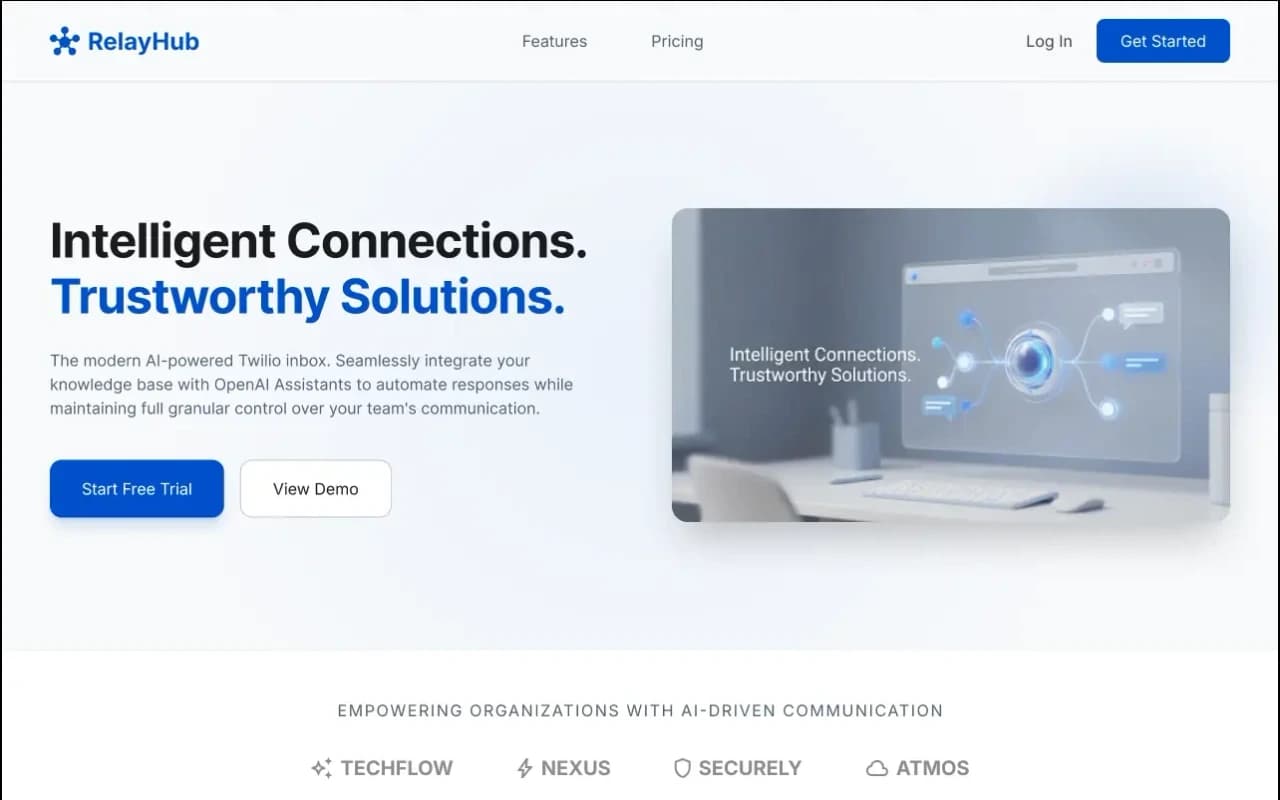
One triage view for Twilio phone and digital threads, with OpenAI drafts under admin prompts. Built for teams tired of rebuilding context across tools.
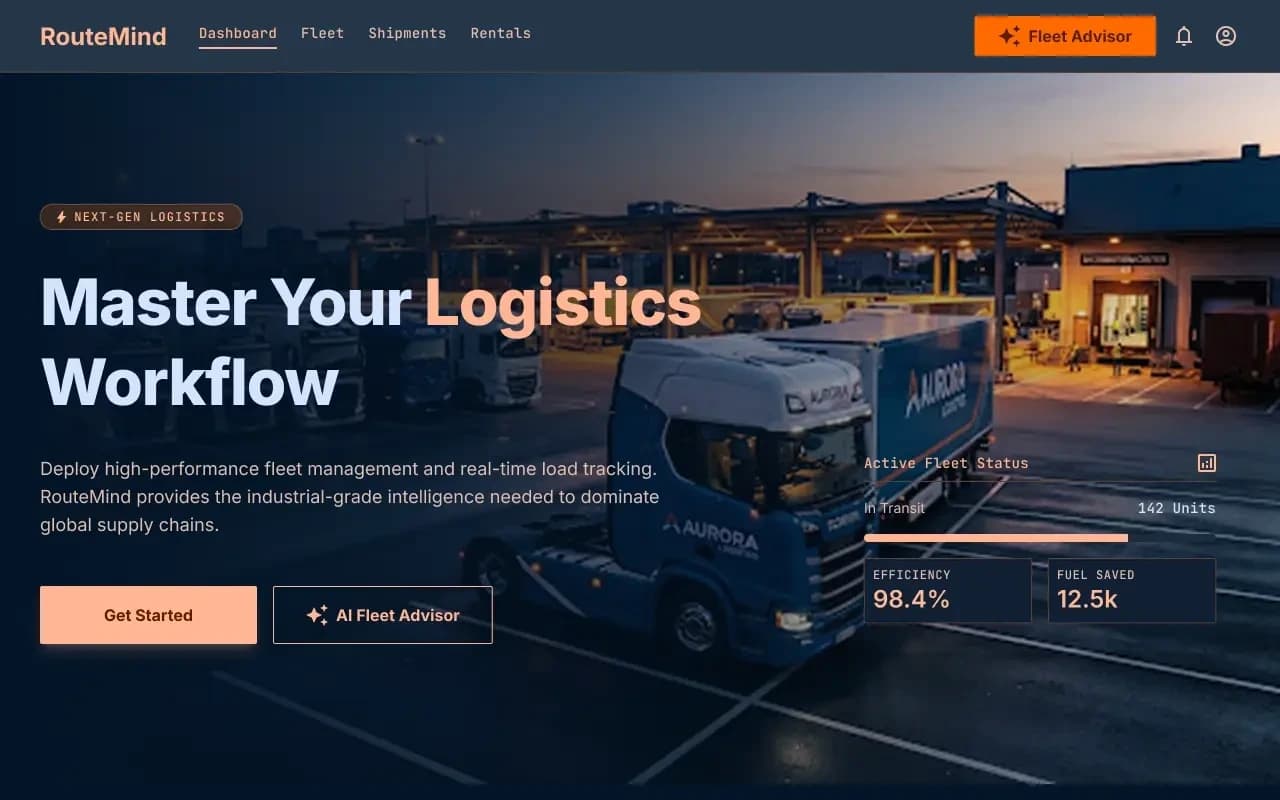
Shipper load board and fleet dashboard on one ops model, with an AI advisor that reads live capacity before suggesting the next move.
FAQ
Questions
More on all insights, AI development, or contact Algo Vortex.